Transparent Randomness: How Verification Systems Influence Trust in Digital Game Outcomes

The National Institute of Standards and Technology (NIST) has long emphasized that reliable digital systems depend on strong methods for generating and validating randomness because unpredictable outcomes influence security, fairness, and user confidence across online environments.

Questions about fairness have become common as digital games and betting systems continue to evolve. Unlike physical games where people may observe cards being shuffled or a wheel being spun, online systems operate behind screens and hidden algorithms. This separation creates uncertainty for users who cannot directly observe how outcomes are produced. Some communities discussing MM2 gambling Roblox systems and similar digital environments often reference transparency features because users increasingly want greater visibility into how results are generated.

Trust has become a central issue in digital interactions. Whether users participate in online games, financial technology systems, or randomized digital environments, people generally want assurance that outcomes follow predefined rules rather than hidden manipulation. As a result, technology developers have introduced various verification methods designed to increase transparency and explain how digital randomness functions.
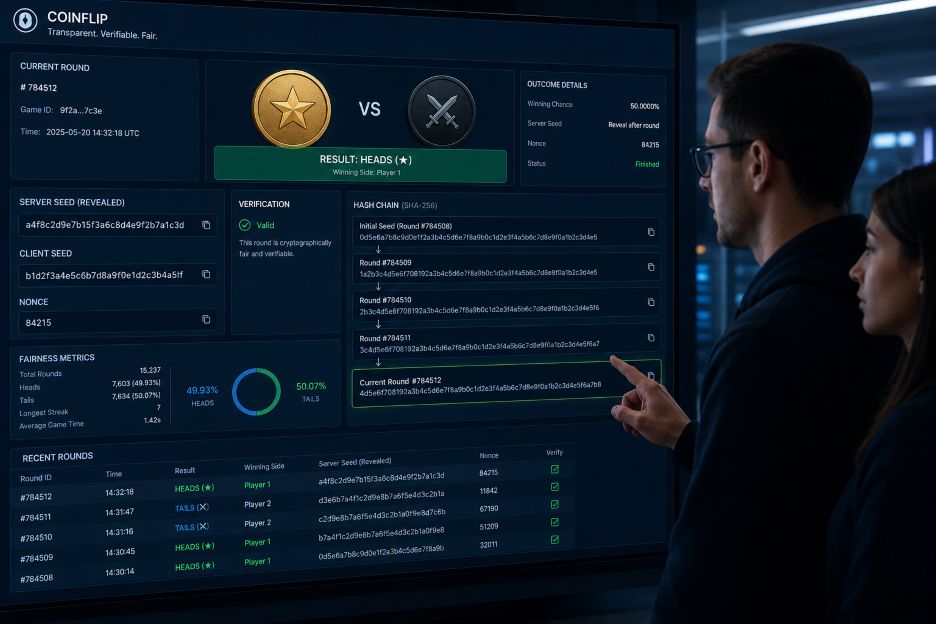
users reviewing fairness metrics and data validation processes - Transparent Randomness: How Verification Systems Influence Trust in Digital Game Outcomes

Why Users Question Fairness in Digital Outcomes

Human psychology naturally seeks explanations for uncertain events. When outcomes happen quickly and the process remains invisible, people often attempt to fill information gaps with assumptions. This reaction is not limited to gambling environments. It appears in financial markets, recommendation systems, and even social media algorithms.

Research from the Pew Research Center has shown that users frequently express concerns about algorithmic systems because many digital processes appear difficult to understand. People often become skeptical when they cannot clearly see how decisions are reached.

Traditional physical environments provide visual signals that help create confidence. Someone watching dice roll across a table or seeing cards shuffled receives direct sensory feedback. Online systems replace visible actions with lines of code running in the background.

That difference creates an important challenge. Users are expected to trust systems they cannot directly inspect.

In situations involving random events, individuals sometimes interpret patterns where none exist. Human brains are designed to identify connections, even when results happen by chance. A sequence of repeated outcomes may appear suspicious despite occurring naturally in random systems.

How Verification Systems Work

Verification systems attempt to reduce uncertainty by making portions of the process visible and measurable. Their purpose is not to change outcomes. Instead, they allow users to confirm that systems followed established rules.

One commonly discussed approach involves cryptographic verification methods. These systems often use mathematical functions that create unique values associated with future outcomes.

The process generally follows several stages:

  • A system creates a hidden value before an outcome occurs.
  • A secure cryptographic hash is generated.
  • The hash is shared before the event takes place.
  • The original value becomes visible afterward.
  • Users can compare both values to verify consistency.

This process prevents changes after the outcome has already been generated. Since cryptographic functions create specific outputs from specific inputs, modifying information afterward would create mismatched results.

The Internet Engineering Task Force (IETF) explains that cryptographic hashing methods are designed so that even small changes in source information produce completely different outputs. This property makes verification useful for confirming data integrity.

Within some gaming discussions, users may also refer to verified item-based random systems or transparent virtual coinflip mechanics that rely on similar concepts. The underlying goal remains the same regardless of platform type: making processes easier to inspect.

Impact of Transparency on Trust

Transparency influences behavior because visibility often reduces uncertainty. People generally feel more comfortable when systems provide understandable explanations.

McKinsey & Company has noted in technology trust research that users increasingly expect digital systems to provide accountability and explainability. Confidence often improves when people understand how a process works.

This effect extends beyond gambling-related environments. Banking applications provide transaction histories. Navigation platforms display route calculations. Online stores show delivery tracking information.

Users often value evidence that systems are functioning as expected.

Transparency also creates a sense of participation. Instead of relying entirely on assumptions, individuals can independently inspect available information and verify consistency. Even if users never perform technical checks themselves, simply knowing that verification exists may influence perception.

However, transparency does not automatically eliminate doubt. Some systems remain difficult for average users to understand. Technical explanations involving cryptography, algorithms, and random number generation may still appear complicated.

As a result, designers increasingly focus on presenting verification information in simpler formats. Interfaces that translate technical processes into understandable visual explanations may help reduce confusion.

Future Developments in Betting Technology

Technology systems continue moving toward greater accountability and visibility. Developers increasingly recognize that users expect transparency as a standard feature rather than an optional addition.

Blockchain-based record systems, independently audited algorithms, and public verification tools continue appearing in discussions around digital fairness. These technologies attempt to create stronger evidence trails that allow information to be checked after events occur. Broader conversations around how technology is reshaping modern betting experiences also reflect how digital environments increasingly rely on transparency features and data validation tools to support user confidence.

Artificial intelligence may also influence future verification systems. AI tools could potentially identify irregular patterns, monitor system behavior, and improve anomaly detection.

Still, future discussions will likely focus on balancing complexity with usability. Transparency loses value if users cannot understand the information being presented.

Responsible use also remains important. Gambling activities involve financial and behavioral risks, and outcomes remain uncertain regardless of how transparent systems become. Verification methods may explain how systems function, but they do not predict results or remove risk.

Conclusion

Questions about fairness will likely remain part of digital environments because users naturally seek confidence in systems they cannot physically observe. Verification technologies emerged as a response to this challenge by creating ways for processes to become more visible and measurable.

As digital platforms continue evolving, transparent item verification systems and validated random outcome models may become increasingly common. Their broader role extends beyond technical functionality. They shape how people understand trust itself.

Greater transparency does not guarantee certainty, but it can reduce confusion and support informed decision-making. Ultimately, confidence in digital systems often grows when users understand how outcomes are produced and how those processes can be independently checked.

Risk Warning: Gambling activities involve financial risk and may affect behavior or decision-making patterns. Participation should remain responsible and within personal limits.


Interactive Casino Design Trends Accelerate as Rooli Inspires Smarter Digital Gaming Spaces

Young gamer explores immersive casino platform inside bright modern entertainment lounge space - Interactive Casino Design Trends Accelerate as Rooli Inspires Smarter Digital Gaming Spaces

The online betting market has evolved far beyond the digital sportsbook websites people used in the late 1990s. Back then, most casino platforms looked nearly identical, with cluttered pages and very little attention paid to user experience.

Today, companies like Rooli are helping push the industry toward something more immersive and entertainment-focused.

Modern platforms now place more emphasis on interaction, atmosphere, player comfort, and ease of use alongside the betting experience itself.

At an old sports betting operation in Manchester, one customer casually remarked that “it feels more like the casino is a streaming app instead of an old gambling site.” Odd comparison, maybe, but it captures the shift perfectly.

Design teams working in betting technology have realized that the old approach of squeezing endless information into every corner of a webpage no longer works.

Betting interfaces are now cleaner, more visually appealing, and designed to match current digital trends.

Interactive reward systems, responsive mobile dashboards, and personalized layouts have all raised expectations for what an online casino should feel like.

User Engagement Versus Simple Betting Options

In the early years of online betting, most users only cared about odds and payouts. That is no longer the case.

People now spend far more time browsing betting platforms, so operators have started investing heavily in user engagement and platform experience.

Features such as minimalist interfaces, real-time achievements, customizable layouts, and social interaction tools have become common across modern casino platforms.

Some operators now personalize game recommendations and reward systems based on a player’s habits over time, creating experiences that feel more tailored instead of generic.

A software designer I spoke with recently compared the trend to modern retail websites. “People stay longer when the platform feels intuitive,” he explained. He added that casino technology is finally beginning to understand that principle.

The improvements are noticeable almost immediately. Navigation feels simpler, mobile optimization is smoother, and animations are less distracting than they once were.

Even loyalty systems now resemble gaming progression mechanics rather than traditional point-collection programs.

Technology Starts to Blend With Entertainment

Some of the biggest changes happening in betting technology are emotional rather than purely visual.

Modern casino platforms increasingly try to make users feel connected and engaged through live dealer systems, personalized promotions, and interfaces that respond to user behavior in real time.

Industry insiders have noted that even small improvements, such as faster loading menus or easier account navigation, can significantly improve user satisfaction.

Better reward tracking and cleaner layouts also reduce frustration, which helps users stay engaged longer.

Streaming culture has also influenced betting technology. Users now expect platforms to respond instantly and feel interactive.

As a result, many betting services have started borrowing ideas from gaming apps, streaming platforms, and social media systems.

A More Optimistic Future for Betting Technology

One positive outcome of these changes is that competition in the industry is becoming more focused on user experience rather than aggressive promotions alone.

Better design, clearer navigation, and smoother interfaces are slowly becoming major selling points for betting platforms.

At a recent gaming expo, several discussions reportedly focused more on interface responsiveness and usability than on reward programs or bonus structures. That shift says a lot about where the industry is heading.

Not long ago, many people imagined what makes an online casino great as a race toward larger rewards and bigger promotional offers.

Now the conversation is shifting toward creating platforms that feel intuitive, engaging, and trustworthy. For many users, that may end up being the more meaningful innovation.

Top 20 Online Casinos UK: A Curated List for Modern Betting Enthusiasts

In today’s fast-paced digital environment, curated lists have become essential tools for navigating complex industries. The list of the top 20 online casinos uk is not only a list, but a well-chosen list of sites that received high ratings. It is in terms of performance, security and user experience. To those who value systematic information and data-driven advice, the way these lists are created may make a big difference between selecting the appropriate platform.

The Importance of Curated Casino Lists

ranked list online casinos tablet 300x167 - Top 20 Online Casinos UK: A Curated List for Modern Betting Enthusiasts

There are hundreds of online casinos, and it might be disheartening to find any reliable options. This is whereby curated lists are used. When the list of the options is reduced to the top 20, the user can concentrate on the platforms based on the key criteria.

Factors that are often considered in these lists include licensing, variety of games, availability of bonuses, methods of payment and service to customers. By making this information one resource, they save time to users and minimize the chances of selecting unreliable platforms.

The Most Important Criteria Leading to Rankings

The list of the top 20 online casinos in the UK is not chosen randomly. The evaluation of each platform is done in a systematic way to give justice and precision.

1-Licensing and Regulation

The reputable casinos are run under stringent regulatory measures, which make sure that they are run within the industry standards. This gives the players an assurance of the plausibility of the platform.

2-Game Selection

There is a great variety of games which are necessary. Best casinos have it all, including traditional table games, up-to-date slots and live dealers.

3-User Experience

A positive user experience is helped by ease of navigation, fast loading and even creating a user-friendly design. The platforms which focus on these aspects are likely to be higher ranked.

4-Bonuses and Promotions

Bonuses should also be good as in order to improve the overall experience, it should be transparent and fair. Wagering terms and requirements are critically considered.

5-Payment Options

It is important to have flexible and safe ways of payments. The most appropriate platforms offer various alternatives to deposit and withdrawals.

The Effect of Technology on Rankings

Technology has been very important in the making of these curated lists. Premier algorithms and user feedback mechanisms will assist analysts to reveal which platforms are consistently providing high-quality experiences. The other essential consideration would be mobile compatibility.

As more gamblers choose mobile casinos for their gaming experience, those casinos offering better mobile compatibility tend to fare well. Also, a range of innovations, including live streaming and interactive, affect the overall attractiveness of a casino, which will influence its ranking in the list.

Benefits of Using Casinos on a Top 20 List

Using a list of curated works has a number of benefits. To begin with, it makes the process of making a decision simpler as only the most credible options are displayed. Second, it allows establishing a criterion of comparison of various platforms on the basis of similar criteria.

These lists can be considered an entry point to new users, and they provide some guidance amidst otherwise quite a complicated landscape. In the case of experienced players, they give insights into new platforms and trends in the industry.

Getting to Know Trends in Online Casinos

The top 20 online casino UK ranking list is never going to remain the same for long. It is because there will always be new developments that will be introduced both in terms of technologies as well as player preferences. Among the latest trends are the introduction of live games, personalization through AI technology, and improvements in payment systems. The innovations still influence the industry and determine the ranking of the casinos.

The Responsible Use of Curated Lists

Although curated lists can be useful, they should not serve as a solution but as an excellent guidance. Their preferences and the objective of their gaming, together with personal preferences, also form an important factor for the selection of an appropriate platform. Before the gamers make up their minds on which online casinos to use, it is recommended that they give it some thought.

The fusion of prearranged knowledge and personal investigation works better.

Learn More about Betting and Technology

Being a better-informed person can make you better at making informed decisions in the online casino realm.

You can also check the article: How Technology Helps People Get into Betting Easily?

Such kind of content offers more background details and ensures that the readers remain abreast of the new trends in the industry.

End Notes

The 20 leading online casinos UK provide a systematic and trustworthy means to negotiate the online betting marketplace. With an emphasis on quality, security, and user experience, these lists can be of great use to both new and experienced players. Being aware of the criteria that are used to come up with these rankings can go a long way in helping your decision making process. These lists can be very effective tools in locating platforms that meet your preferences and expectations, when approached in the right manner.