Can You Lose Money Even With Good CLV?

frustrated gambler reviewing losses 300x200 - Can You Lose Money Even With Good CLV?Closing Line Value is one of the best indicators of betting skill. It tells you whether you’re beating the market, not just riding luck, even if you’re placing bets through platforms like Nacional Bet Brasil. But good CLV does not guarantee short-term profit. In fact, it often comes with stretches of losses that feel unfair, confusing, and discouraging. Understanding why this happens is critical. If you don’t, you’re likely to abandon a good process, tilt your bankroll, or convince yourself that CLV “doesn’t work” right when it matters most.

Variance Windows Are Bigger Than Most Expect

Variance isn’t just a buzzword. It’s the dominant force in sports betting over small and medium samples. Even with a real edge, outcomes cluster unpredictably. You can do everything right and still lose for weeks or months. That’s not hypothetical. It’s normal. Good CLV means you’re betting at prices that are better than the market’s final assessment. But that edge is usually slight. Often, a few percentage points. That edge plays out slowly. Think of it this way: if you flip a slightly weighted coin, it doesn’t land heads every time. You can easily see long stretches of tails. The edge shows up only after many repetitions. In betting, those repetitions are bets. And most bettors underestimate how many are required before the math asserts itself. This creates variance windows where:
  • Your CLV stays strong.
  • Your results go negative.
  • Nothing feels aligned

Sample Size Reality Is Brutal

Most bettors talk about sample size. Few truly respect it. Fifty bets tell you almost nothing. One hundred bets isn’t much better. Even five hundred bets can mislead, depending on market type and edge size. A bettor with solid CLV might still be unprofitable after:
  • An entire season
  • Several hundred wagers
  • Multiple months of disciplined betting
That doesn’t mean the edge isn’t real. It implies the sample still isn’t large enough to overcome variance. This is where people get trapped. They assume: “I’ve been beating the closing line for months. I should be winning by now.”
That expectation is dangerous. It leads to frustration, overconfidence, or unnecessary changes. CLV is a directional signal, not a timing guarantee. It tells you you’re pointed the right way. It does not tell you when the results will catch up. The market doesn’t pay for effort or correctness. It pays on outcomes, eventually.

Why Good CLV Can Still Lose Money

There are several practical reasons why a bettor with good CLV might still be down. One is edge size. Beating the closing line by a tiny margin still leaves plenty of room for variance. Not all positive CLV is equal. Another is bet type. Markets with higher volatility, like player props or derivatives, can amplify swings even with solid pricing. Then there’s stake sizing. If stakes fluctuate emotionally rather than systematically, a good CLV can be overwhelmed by poor bankroll management. And finally, there’s timing distortion. A bettor may beat the closing line at one book while the actual market close is slightly different. That doesn’t invalidate CLV, but it can shrink the effective edge. None of this means CLV is useless. It means it’s not magic.

Psychological Traps During CLV Losing Stretches

This is where most bettors fail. Not mathematically, but mentally. The first trap is doubt creep. You start questioning bets that you would have made confidently before. You hesitate. You pass on good numbers. You second-guess your reads. The second trap is result chasing. You abandon price sensitivity because you “need a win.” You take worse numbers. CLV drops. The original problem compounds. The third trap is false adjustment. You change models, sports, or strategies not because CLV broke down, but because variance hurt your confidence. Ironically, many bettors blow up right after proving they can beat the market. Good CLV with bad results feels unjust. Humans are wired to expect fairness in the short run. Betting doesn’t offer that.

What CLV Is Actually Telling You During Losses

When you’re losing money but maintaining good CLV, the message isn’t “stop.” It’s “stay disciplined.” CLV is saying:
  • Your prices are competitive.
  • Your timing is good
  • Your opinions aren’t random.
That’s valuable information, especially when emotions are screaming otherwise. This doesn’t mean you ignore everything. You still review bets. You still look for leaks. But you don’t panic just because the bankroll is down. A drop in CLV is a warning. A drop in results alone is not. Learning to separate those two signals is one of the most significant steps from amateur to professional thinking.

The Role of Bankroll and Expectations

Many CLV-related losses become catastrophic only because bankrolls are too tight or expectations are too high. If your bankroll can’t survive normal variance, even a good edge will fail. That’s not bad luck. That’s poor planning. Good CLV requires:
  • Conservative staking
  • Emotional patience
  • Realistic timelines
You’re not owed profit in a month. Or three months. Sometimes not even a year. You’re building an edge, not flipping a switch. When expectations are misaligned, every downswing feels like proof that something is wrong.

When Losing With Good CLV Is a Problem

There are times when losses, along with good CLV, deserve scrutiny. If:
  • CLV is marginal, not meaningful
  • The sample size is still small.
  • You’re only beating one soft book.
  • Results diverge wildly for too long.
Then a deeper analysis is fair. CLV is a guide, not a shield. It doesn’t excuse sloppy execution or blind faith. But abandoning it prematurely is far more common than trusting it too long.

The Bottom Line

Yes, you can lose money even with good CLV. And many skilled bettors do, temporarily. Variance windows are genuine. Sample sizes take time. Psychology makes everything more complicated. CLV doesn’t promise quick wins. It promises honest feedback. If you’re beating the closing line and managing your bankroll responsibly, you’re doing the hard part right. The rest is patience. In betting, skill shows up slowly. And the people who survive the uncomfortable stretches are usually the ones who benefit when the math finally catches up.

Why Pros Always Compare Odds Before Betting

analyzing odds from multiple sportsbooks 300x300 - Why Pros Always Compare Odds Before BettingMost casual bettors place a wager as soon as they find a line they like. Maybe it feels fair. Perhaps it matches what they heard on TV or saw promoted on a site like DJ Bet Brasil. Pros don’t do that. They slow down and compare odds across multiple sportsbooks before risking a dollar. That habit isn’t about being cautious. It’s about math, discipline, and long-term survival. Comparing odds is one of the few edges a bettor can fully control, and professionals treat it as non-negotiable.
Odds Are the Price, Not the Prediction
Every bet has two parts: the outcome and the price. Casual bettors focus almost entirely on the outcome. Pros concentrate just as much on the price. Taking the worst price doesn’t change the game, the team, or the result. It only lowers your expected return.
That difference might look small. A shift from -110 to -105 or +120 to +125 doesn’t feel meaningful in the moment. Over hundreds or thousands of bets, it’s the difference between winning and losing long term. Pros understand that they don’t need to predict games perfectly. They need to buy at prices below the market average consistently.

Market Inefficiencies Exist, But Only If You Look

Sports betting markets are efficient than in the past, but they’re not perfect. Odds move because of injuries, weather, lineup news, and betting volume. Different sportsbooks react at various speeds and with different risk tolerances.
That creates inefficiencies. One book might overreact to public money. Another might lag behind a sharp move. Some adjust aggressively. Others wait. For short windows, the same bet can have noticeably different odds across the market. Pros don’t assume the first line they see is correct. They shop around to find where the market hasn’t fully caught up yet. This is especially true in minor leagues, player props, live betting, and niche markets. The less attention a market gets, the more likely it is to be mispriced somewhere. Comparing odds is how pros find those cracks.

Regional Pricing Differences Matter

Sportsbooks don’t operate in a vacuum. Regional betting behavior shapes pricing. A sportsbook with a heavy local fan base might shade lines toward popular teams. A book operating in a sharp-heavy market might post tighter odds to limit exposure. Another might use more conservative pricing to protect against professional action.
These differences show up in subtle ways. A point spread might be the same everywhere, but the juice isn’t. A total might be half a point higher at one book. A prop might have drastically different limits and odds depending on location. Pros take advantage of that.
They know that geography affects public bias, and public bias affects pricing. By comparing odds across regions, they avoid paying extra tax on popular sides and inflated narratives. It’s not about finding a “wrong” line every time. It’s about consistently choosing the best version of the same bet.

Sharp Books vs Public Books

Not all sportsbooks serve the same audience. Some cater to recreational bettors. Others are built to handle sharp action. Public books often shade lines toward popular teams, star players, and overs. They know where casual money is likely to land. That shading creates opportunities for bettors willing to go against the crowd.
Sharp books, on the other hand, tend to post cleaner, more efficient lines. They move quickly when respected bettors place large wagers. Their odds are often closer to the actual market value. Pros use both.
They compare public books to find inflated prices driven by hype. They compare sharp books to gauge where the smartest money is landing. The difference between those two perspectives is valuable information. If a public book is offering a noticeably better number than a sharp book, that’s not random. It tells a story about who is betting what, and why.

Small Edges Compound Over Time

Comparing odds doesn’t guarantee short-term wins. Nothing does. What it guarantees is that you’re not donating extra margin to the sportsbook. Pros think in terms of volume. A half-percent edge on one bet feels insignificant. Over a season, it’s massive.
If two bettors pick the same games with the same accuracy, the one who consistently gets better odds will outperform the other. That’s not theory. It’s math. This is why professionals obsess over line shopping even when the difference feels trivial. They know that the market rewards discipline, not convenience.

It’s a Mindset, Not a Trick

Comparing odds isn’t a secret strategy or a shortcut. It’s a mindset shift. Casual bettors ask, “Do I like this bet?” Pros ask, “Is this the best price available?”
That question changes everything. It turns betting from entertainment into a decision-making process grounded in value. Pros accept that they’ll lose bets. What they don’t accept is losing value before the game even starts. That’s why they compare odds, every time.

The Fastest Ways Bettors Destroy Their Bankroll

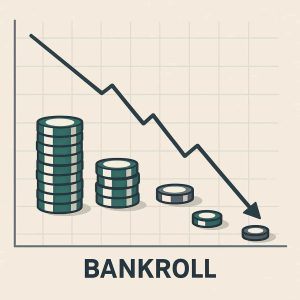
Bankroll decline graph with poker chips 300x300 - The Fastest Ways Bettors Destroy Their BankrollMost bettors don’t lose their bankroll because they don’t know sports, they lose it because of how they bet. The problem is rarely the pick itself; it’s the decisions made around that pick. Even when playing on platforms like Zeroum Bet casino, emotional reactions, poor stake control, and false confidence wipe out accounts faster than any bad beat ever could.

Three habits do the most damage: chasing losses, overbetting “confidence” picks, and emotionally increasing stake size. They often show up together, feeding off each other, and once they take hold, the bankroll usually doesn’t last long.

Chasing Losses

Chasing losses is the most common way bettors blow through their money. It starts with a simple thought: I need to get back to even. After a losing bet, instead of sticking to a plan, the bettor looks for the next opportunity to recover quickly.
That recovery usually means betting again right away. Sometimes it means placing more bets than usual. Other times, it means betting on games they wouldn’t normally touch. The focus shifts from making good decisions to erasing the pain of the loss.
This mindset changes everything. Bet selection gets sloppy. Lines aren’t compared. Value isn’t considered. The question becomes “What can I bet right now?” instead of “Is this a good bet?”
Chasing also increases emotional pressure. Each new bet carries more weight because it’s tied to fixing a previous mistake. When that bet loses, frustration grows. The urge to chase gets stronger. And the cycle repeats.
What makes chasing especially dangerous is that it feels logical in the moment. One win really can erase multiple losses. But relying on that outcome puts bettors at the mercy of variance. Eventually, the run doesn’t come, and the bankroll collapses fast.

Overbetting “Confidence” Picks

Another fast track to losing money is overbetting picks that feel like locks. These are the games bettors say they “can’t lose” or “love” more than usual. The logic is simple: if the pick feels stronger, the bet should be bigger.
The problem is that confidence is subjective. It’s influenced by recent wins, media narratives, personal bias, or just a strong opinion. None of those guarantees a higher probability of winning.
Sports don’t reward certainty. Heavy favorites lose. Star players have off nights—game flow changes. Even the best analysis can be undone by one injury, one call, or one bad bounce.
When bettors overbet these spots, they expose too much of their bankroll to a single outcome. One loss doesn’t just hurt. It creates a hole that’s hard to climb out of.
This habit often shows up after a winning streak. A bettor feels sharp. Picks have been hitting. Confidence rises. Then comes the big bet. When it loses, the damage is far greater than a standard loss, and the emotional fallout often leads straight into chasing.
The reality is simple. If a bettor doesn’t have a proven edge that justifies larger stakes, then bet size should stay consistent. Confidence alone is not a bankroll strategy.

Increasing Stake Size Emotionally

Emotional stake increases are closely tied to both chasing and overconfidence. They happen when feelings, not logic, determine how much is bet.
Sometimes the emotion is frustration. After a few losses, the bettor increases the next stake to “make it worth it.” Other times it’s excitement. A good day turns into a bigger bet because everything feels easy.
In both cases, the decision has nothing to do with probability or long-term results. It’s a reaction to how the bettor feels in that moment.
This is dangerous because bankroll management only works when it’s consistent. The entire point of flat staking or percentage-based betting is to control risk over time. Emotional adjustments break that structure.
Once the stakes start moving based on mood, losses become unpredictable. A normal losing streak becomes devastating because too much money is tied to individual outcomes. One bad day can undo weeks or months of steady progress.
Emotional betting also clouds judgment. When more money is on the line, it’s harder to accept losses calmly. That stress leads to rushed decisions, late bets, and poor discipline. The spiral accelerates.

Why These Habits Are So Hard to Avoid

All three behaviors come from the same place. Bettors want control. They want to feel like they can fix things immediately or capitalize on a strong feeling. Sports betting doesn’t work that way.
Results are short-term and random, even when decisions are sound. That gap between effort and outcome creates emotional tension. Without rules in place, emotions fill the space.
Many bettors also underestimate how quickly small mistakes compound. One oversized bet doesn’t seem fatal. One chase feels recoverable. But stack them together, and the bankroll erodes faster than expected.

Protecting the Bankroll

The fix isn’t complicated, but it requires discipline. Set stake sizes in advance and don’t change them based on wins or losses. Accept that losing days are part of betting, not a problem to solve immediately. And treat every bet as one decision in a long series, not a moment that defines success or failure.
The fastest way to destroy a bankroll is to let emotions dictate decisions. The quickest way to keep one is to remove emotion from the process as much as possible.
In sports betting, survival matters. Without a bankroll, even the best picks don’t matter at all.

Turbocharged Payouts The Technology Behind Lightning-Fast Withdrawals at Elite Casinos

Person smiling at desk with blurred screens showing secure fast online payout workflow - Turbocharged Payouts The Technology Behind Lightning-Fast Withdrawals at Elite Casinos

In the context of electronic high gambling stakes, players demand speed, reliability, and seamless transactions.

Such platforms spend a significant amount on modern technology that processes payments more securely and efficiently.

Dispatching funds to players involves the seamless integration of technology, design, and fintech advances, even if the players are unaware of how complex the processes are.

Systems Designed for Seamless Transactions

Leading payment gateway providers enable instant payouts and swift approvals for cross-border transactions.

The best highstakes online casinos work with payment processors that offer real-time payment and transaction monitoring features that allow funds to stream and skip the queues for identity verification.

Sophisticated transaction monitoring systems flag the transactions quickly, bypassing the need for manual intervention.

Some online casinos also leverage separate dedicated payment processors for their withdrawals.

This is often referred to as a ‘payout server,’ which effectively allows for withdrawal prioritization and avoids withdrawal requests from getting stalled as a result of other operational processes.

As a result, players experience reduced wait times for withdrawals to clear, and their accounts receive more approved and completed payment transactions.

How Smart Verification Systems Mitigate Customer Waiting Time

Participants must undergo verification to confirm their identity, which is one of the leading causes of wait times.

To tackle this issue, tech companies developed automated KYC systems that authenticate identification documents through encrypted biometric matching.

Rather than having employees manually review documents, the systems validate documents against data repositories in real-time.

Long-standing users benefit from this system’s reduction in approval time, while new users can swiftly and securely complete the verification process.

When verification times drop from hours to minutes, waiting periods to have withdrawal requests approved are eliminated.


ALSO READ: AI and the Future of Gambling Platforms: Transforming Experiences with Jili Slots


How Blockchain Technologies and Digital Wallets Have Increased the Frequency of Payouts

In developed gambling markets, users have cryptocurrency accounts, which facilitate rapid and transparent transactions.

Participants have come to prefer blockchain payment solutions as traditional banking channels are bypassed and transactions are completed in a few minutes, irrespective of the user’s location.

Digital wallets such as PayPal, Skrill, and mobile banking apps also employ sophisticated API technologies that facilitate direct integration with the casino’s systems.

This design eliminates bottlenecks, enabling the casino software to automatically process withdrawals and release them once their risk management systems approve them.

Over the course of every automated request for fraud detection during withdrawals, machine learning models study behaviors to ensure that the withdrawal request is from an active user of the platform.

Platforms only have to conduct extensive manual audits when they detect fraud, which ultimately compromises the efficiency of the withdrawal queue.

The top-ranked casinos, even behind the curtains, manage withdrawal simulators. These products help to alleviate system bottlenecks so that when players paper over the infrastructure and are able to move money seamlessly from one user to another, they are able to do so without a hurdle.

The Implications of Instant Cash-Outs for Users

Instant withdrawals are significantly more than simply being a user-friendly experience.

Users are more likely to be persuaded to stick with a given platform when they have the ability to withdraw their funds without delay; instant cash-outs cultivate platform loyalty and usage.

The ability to rapidly achieve cash-out is the main selling point in an over-saturated sector that primarily relies on entertainment and consumer reputation.

Instant withdrawal processes have become almost entirely automated, removing the once manual and tedious admin work that had to be completed for each withdrawal.

Players today, in a more modern gaming experience, are able to achieve more satisfaction due to the transparency of a system built to support active efficiency.